

Josh Cardoz and Olivia Haywood, officers at Sponge Group, a British consultancy specializing in workplace learning, believe many organizations are confronting a new phenomenon they call “Generation Numb.” For leaders pursuing large-scale transformation, they argue, the implications are significant.
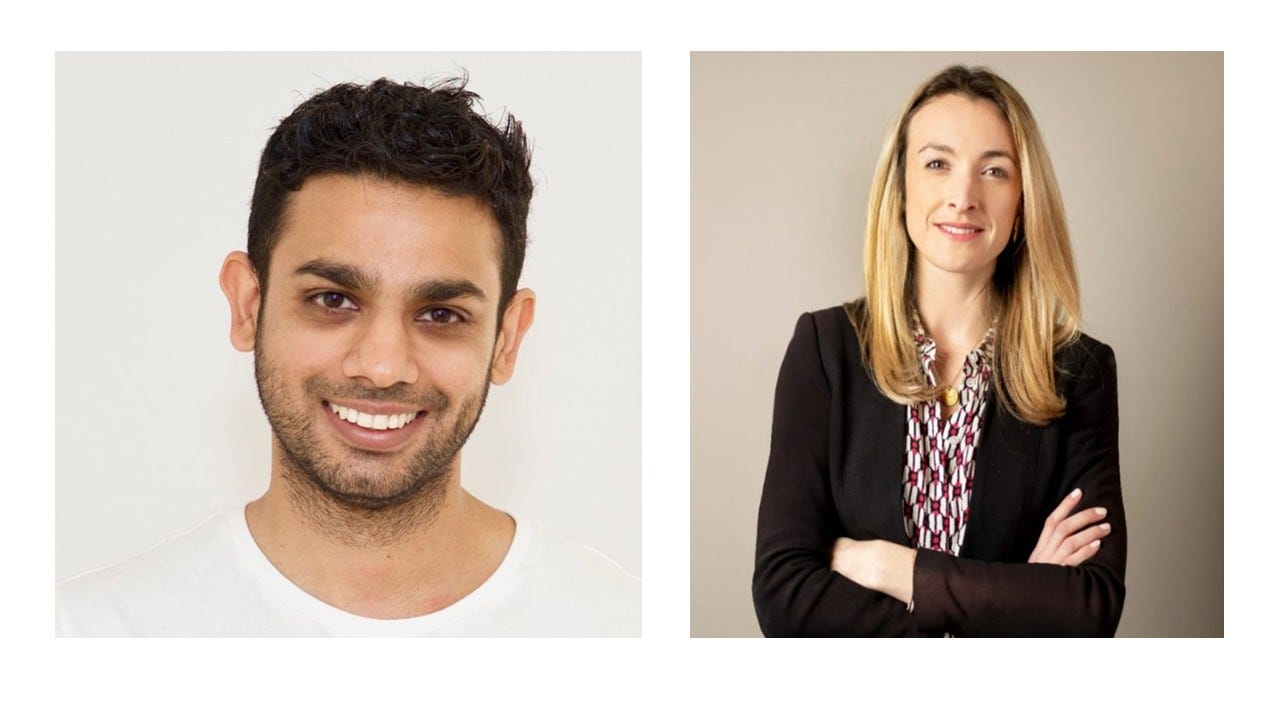
C-Suite: You’ve labeled today’s workforce “Generation Numb.” Why?
Cardoz: We think it explains what’s going on in the world now. The modern workforce is undergoing a fundamental shift. Global upheaval, economic instability, the after-effects of the pandemic, and digital saturation are shaping a workforce that is numb. They are increasingly cynical, stuck, longing for connection, and hunting for a renewed sense of identity at work. People are still showing up. They’re still doing their jobs. But they’re operating in survival mode.
C-Suite: What evidence do you see of this?
Cardoz: The signals are everywhere. Nearly 60% of workers say they’re overwhelmed by the pace of change. There’s been a 36% drop in willingness to support change. Twenty percent experience loneliness daily. Half are worried they can’t pay their bills. Those numbers matter because they sit underneath every transformation program leaders are trying to execute, shaping how change lands, how quickly it’s adopted, and whether discretionary effort ever materializes.
C-Suite: What’s driving this numbness?
Cardoz: People are navigating a polycrisis. Recession, war, climate anxiety, polarization, rising inequality, all at once. At the same time, digital adoption now outpaces human adaptation. Each new technology reaches mass use faster than the last. We’re still recovering from the pandemic and adapting to hybrid work. What does it mean to be connected to colleagues but never meet them? What does it mean to enter the workforce from the same bedroom where you wrote your college papers? And then you add AI, which can be the biggest boost to your career but could also take your job tomorrow. The pressures are cumulative and relentless.
Haywood: Our diagnosis was triggered by what we were seeing with clients. We deliver large programs for major organizations, and these issues were affecting success. We drew on more than 40 third-party reports and conducted proprietary research across U.S. employees in large organizations, testing this concept of “numbness” across age cohorts. Feeling overwhelmed isn’t new. But what we’re hearing is, “I’ve been doing this for ten years and now I’m numb.”
C-Suite: How is numbness different from burnout and why does that distinction matter to business leaders?
Haywood: Most of the rhetoric is about burnout or mental health crisis. That describes the extreme end of negative emotion. What we found instead was that 60% of people describe themselves as “okay” or “indifferent.” That’s fundamentally different from being burnt out. It’s a person who waits in the wings to be energized, if leadership can unlock them. The danger is that numbness looks like “okay.” It doesn’t trigger alarms. But it steadily erodes the extra effort transformation depends on. It’s not quiet quitting. It’s not rejection. It’s numbness against more demands coming daily. It shows up in employees ignoring initiatives or not really engaging with them.
Cardoz: For a C-suite executive, that creates a dangerous illusion. You can be in the middle of a transformation - launching initiatives, deploying content, tracking milestones - while your execution capacity is quietly shrinking beneath you. There’s dissonance between the executive vision and where your people actually are. It’s related to Maslow’s hierarchy of needs. It’s hard to get excited about customers when you’re worried about the price of bread.
C-Suite: So this becomes a strategy execution issue, not just an engagement issue?
Haywood: Absolutely. Companies are making major investments in transformation, particularly AI, but they’re using standard procedures to drive that change: high-level corporate communications followed by content deployment. In this environment, those standard methods will fail, not because the strategy is flawed, but because the human energy required to absorb it has been depleted. You need to change the energy and focus of the workforce before you can change behavior. Otherwise, you’re investing in transformation on top of shrinking execution capacity.
C-Suite: Is this primarily a white-collar phenomenon?
Cardoz: No. Numbness affects every organization and every team in distinct ways. Every large organization has change fatigue. The erosion of wonder in work, being tied to value and purpose, is common across white- and blue-collar employees. Even CEOs are feeling isolated. In a hybrid world, many don’t truly know their employees. Some are endorsing AI investments without a coherent AI strategy because of external pressure. This isn’t just an employee engagement issue. It’s a systemic constraint on performance and one that affects frontline workers, knowledge professionals, and executives alike.
C-Suite: What is your remedy?
Haywood: It’s sequential. Historically, organizations leap to what we call the “It” stage: this is what needs to change, these are the new capabilities, this is what you must do differently. But in Generation Numb, change is often heard as code for future layoffs. Organizations need to start with the “Me” stage, connecting change to personal priorities. What does this mean for me? Why should I engage? The key isn’t removing fear. CEOs can’t guarantee there won’t be layoffs. But they can create enough relevancy and meaning to build trust. One practical example is being explicit: if you develop these skills, you become more valuable — whether here or elsewhere. Then comes the “Us” stage, restoring connection and community. People are longing for that. Only after “Me” and “Us” can you effectively move to “It” and the initiative itself. Skip the sequence, and change may appear to move forward, but adoption will be shallow and fragile.
C-Suite: What does leadership need to do differently?
Cardoz: Authenticity is critical. There’s honesty in saying: we are in extraordinary change times. We’re changing today, and we’ll need to change tomorrow. Let’s talk about why. Have an adult-to-adult discussion. The other key is agency. Give people as much agency as feasible to define what that change looks like for them. When people have agency, they re-engage.
C-Suite: You’ve emphasized analog experiences in a digital age. Why?
Cardoz: We have a strong legacy in digital solutions. But clients have pushed us to experiment more with analog delivery. We ran a three-day workshop with a Fortune 100 brand entirely without technology - no laptops, no slides. One participant said, “I’ve forgotten that real work can happen outside a laptop.” Another said, “I’ve forgotten what it means to connect with peers in an authentic way.” We even took them to an aquarium and asked them to walk through in assigned customer personas. It unlocked empathy and imagination. These methods were tried and tested. They work precisely because the workforce is overly immersed in technology. In a digitally saturated environment, analog experiences can restore imagination, empathy, and human connection - the very ingredients transformation depends on. Of course, the C-suite has to consider budgets and scale. But we are finding that analog can be a powerful antidote to numbness.
C-Suite: Do you have any final advice for executives pursuing transformation?
Cardoz: Every organization says, “We want our people here,” and it’s usually a place of high performance. Leaders are trying to extract the final 10–15% of performance that becomes competitive advantage. They want to jump to “It” because of urgency and pressure. But their people just aren’t there yet. If you proceed along the Me–Us–It path, and recognize the stage your people are in, you can begin rebuilding them to a place where work becomes a badge of honor again, because they’re connected to their team and to the value of the work. That’s how you unlock the performance you’ve been chasing.