

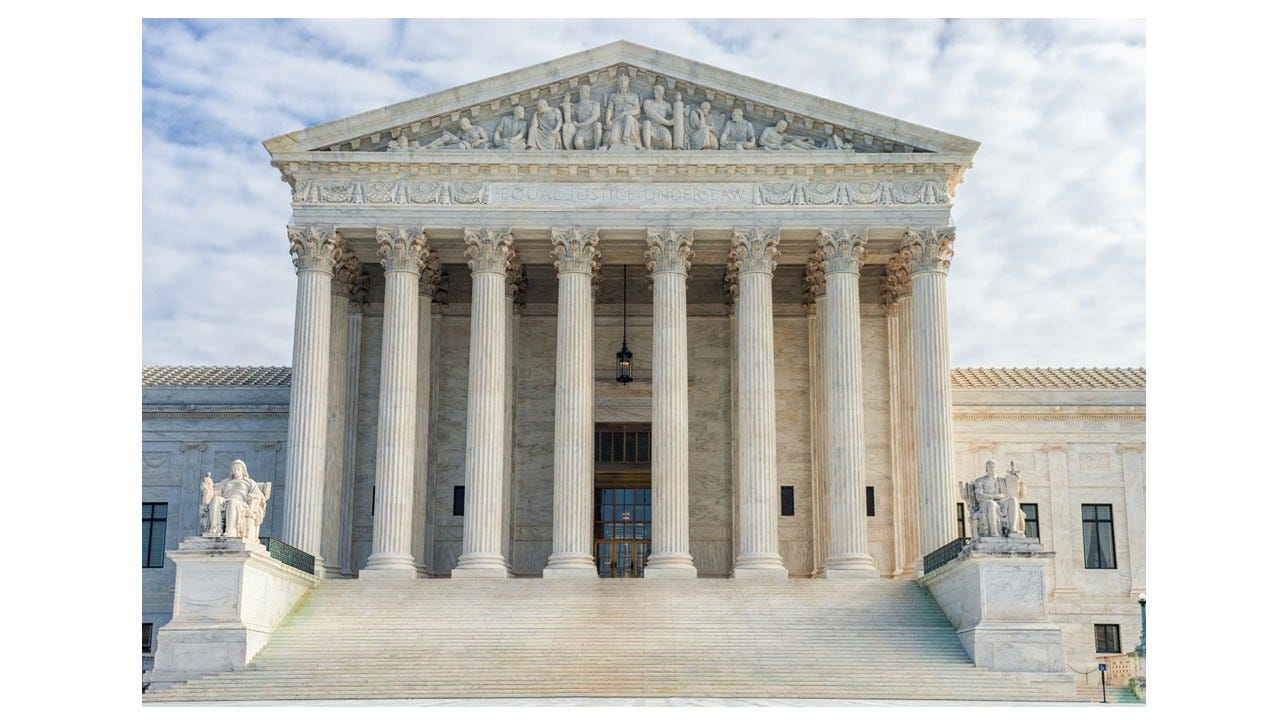
Legal experts invariably warn against predicting U.S. Supreme Court decisions based on oral arguments. Last week’s ruling on President Trump’s use of the International Emergency Economic Powers Act (IEEPA) to impose tariffs was an exception. In a 6–3 decision, the Court held that IEEPA does not authorize tariffs, exactly as seasoned Court watchers had anticipated.
This was not a narrow statutory ruling. It redraws the boundary between presidential and congressional authority in trade policy and forces a recalibration of the Trump 47 administration’s geopolitical and economic strategy.
What the Court Decided and Why It Matters
IEEPA was enacted in 1977 to allow presidents to respond swiftly to national emergencies stemming from foreign threats. Historically, it has been used to freeze assets, block transactions, and impose sanctions. The statute nowhere explicitly mentions tariffs. The administration argued that its broad authority to “regulate” economic transactions included the power to levy import taxes. The Court disagreed, reasoning that tariffs are economically and politically consequential instruments that require clear congressional authorization.
The immediate consequence is clear: the administration’s fastest and most flexible tariff mechanism is no longer available, absent new legislation. The deeper consequence is structural. Emergency authority can no longer serve as a shortcut around the trade policy process. Tariffs remain very much in the policy arsenal, but their deployment will likely be slower, more procedurally constrained, and more legally contestable.
Why This Reshapes U.S. Trade Power
For the administration, rapid tariff announcements signaled resolve and created leverage. Without IEEPA, that shock capability is constrained. Trade actions will likely become more targeted, more bureaucratic, and more legally durable, but also slower.
For companies, the key takeaway is not that tariff risk has disappeared. It is that tariff risk has become more complex. The instrument has changed; the geopolitical tensions driving it have not.
There is also a fiscal dimension. If courts ultimately require reimbursement of tariffs collected under IEEPA, the federal government’s exposure could be substantial. The process would almost certainly be contested, slow, and administratively burdensome. Resolution could take years. In the interim, uncertainty will sit on corporate balance sheets and in federal budget projections alike.
Beyond the fiscal implications, the ruling has important consequences for the structure of North American trade.
USMCA Implications
For companies, the ruling’s potential implications for USMCA are particularly significant. North American supply chains are deeply integrated and rely heavily on the agreement’s rules of origin, tariff preferences, and dispute-settlement framework.
Conceptually, the decision does not materially increase the likelihood of USMCA’s dissolution. North American supply chains, especially in automotive, are trilateral by design, making a return to purely bilateral structures operationally disruptive. Moreover, replacing USMCA would require statutory authority and likely congressional involvement. A wholesale restructuring would impose substantial costs on U.S. firms.
Rather than abandoning USMCA altogether in favor of separate bilateral agreements, the more plausible path is incremental layering: sector-specific measures, side letters, tighter enforcement, and managed-trade adjustments. The agreement would formally remain intact, but operational complexity would rise. For companies operating across North America, that distinction matters.
Four Paths Forward
From a C-Suite perspective, four plausible scenarios emerge:
1) Compliance and Recalibration
The administration unwinds IEEPA-based tariffs and pivots to more defensible statutory authorities. Trade friction continues, but through slower and more procedural channels. Institutional credibility improves, but escalation capacity diminishes.
2) Reimposition Under Alternative Authority
Other statutes are invoked to reimpose tariffs in modified form. Foreign governments adopt a wait-and-see posture, calculating that U.S. measures could again be constrained by the courts. Legal challenges resume. Volatility persists.
3) Targeted, Industry-Specific Escalation
Rather than broad-based tariffs, the focus shifts to specific sectors, including automotive, steel, and semiconductors, under national security or trade enforcement authorities. Economic pressure becomes concentrated. Bargaining leverage increases, but so do retaliation risks and domestic political friction.
4) Legal Escalation and Institutional Conflict
Narrow compliance or aggressive reinterpretation triggers injunctions and prolonged legal confrontation. This is the least stable path. Markets respond quickly to signs of constitutional strain, and capital investment pauses follow.
The most coherent, and therefore most likely, outcome is a hybrid of the first and third paths: formal compliance with the ruling followed by targeted, sector-specific actions under clearer statutory authority. Tariffs will likely persist, but they will become narrower, more structured, and more legally grounded.
Why Automotive Sits at the Epicenter
Few industries illustrate the stakes more clearly than automotive. Modern auto supply chains are deeply integrated with components crossing borders multiple times before final assembly. Electric vehicle production adds further exposure through batteries and critical minerals. Just-in-time logistics magnify even minor disruptions.
Under a compliance-and-recalibration scenario, automakers may pursue tariff reimbursement claims while cautiously restoring cross-border efficiencies. Under sectoral escalation, autos and parts could become direct targets. Input costs would rise. Supply chains linked to Mexico and Canada would come under renewed pressure. Pricing strategies would require adjustment. Investment decisions on plant location and sourcing could accelerate.
In either case, the risk environment remains structurally elevated. The difference lies in duration and concentration. Broad volatility affects many sectors moderately. Sectoral targeting affects fewer players intensely.
How Senior Leaders Should Respond
The Supreme Court’s decision did not end the era of contested trade policy. It changed its operating system. Emergency-based tariff shocks are less viable. Structured, legally grounded trade actions are more likely. Near-term volatility will persist as policymakers recalibrate and litigants test the limits.
For senior executives, the imperative is not to forecast the next headline. It is to build strategic, financial, and operational resilience. The right question is not “Will tariffs return?” but “How resilient is our operating model across multiple tariff regimes?”
Companies should map exposure across products and markets; stress-test margins under varying tariff levels and durations; sequence capital allocation to preserve optionality; and engage proactively in coordinated policy advocacy where sectoral risks are rising.
Trade policy will remain a strategic variable. It will now unfold through more formal channels, over longer timelines, and with greater institutional friction. The phase of emergency tariff shocks may be narrowing, but the phase of structural trade tension is not.