


Ganesh Iyer left a successful career at Caterpillar to run Etnyre International, a family-owned manufacturer founded in 1898. Eight years in, his case for private ownership rests on a deceptively simple distinction, and on a different definition of what it means to grow.
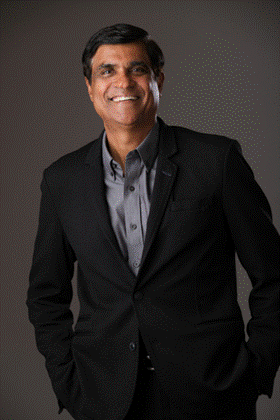
A few years ago, Ganesh Iyer ended mandatory overtime across Etnyre International’s plants. His people had been working long overtime hours month after month, and in an intensive factory environment he judged that neither safe nor healthy. Switching to voluntary overtime meant the company would sometimes ship less, so it began making customer commitments around what voluntary capacity could deliver. Iyer could have kept the overtime mandatory and booked the extra profit. He chose not to.
Small on its own, that decision is the clearest expression of the idea that runs through everything Iyer says about running a company. We optimize profit, he says, rather than maximize it.
Iyer spent roughly two decades at Caterpillar, rising to lead a global power generation business worth about a billion dollars, before leaving to become President and CEO of Etnyre, a family-owned maker of road maintenance and infrastructure equipment founded in 1898. Most senior executives at large companies have, at least once, wondered whether they would be better off running something smaller. Few make the move. Iyer did, and eight years in he has grown the company substantially while holding to a conviction that the right kind of restraint is what makes durable growth possible.
We spoke with him about why he left, what actually transferred from Caterpillar, how trust with a family board is earned, and the case he would make to any executive weighing the same leap.
C-Suite: You ran a billion-dollar business at Caterpillar. What made you leave a global company to run a much smaller, family-owned business, and what appealed to you about that opportunity?
Honestly, when I made the decision, I could not have articulated it the way I can now. At the core, I was ready for a change. Caterpillar is an extraordinary company, a global icon, and nearly everything I know about leadership and management I learned there, working alongside remarkable people. After two decades, I was simply ready.
I had also long believed I could run a smaller company and grow it significantly, and that appealed to me as a very different kind of experience. The other draw was long-term orientation. Private companies can provide greater flexibility in balancing near-term performance with investments that may take years to fully pay off. They are not under constant pressure to deliver every ninety days, and that frees them to take a genuinely long view. So I took a leap of faith, not fully knowing what to expect, explored a few options, and landed at Etnyre. Eight and a half years later, it has been a wonderful ride.
C-Suite: Did anyone try to talk you out of it?
Not really. A few people asked why I was leaving, but no one made a big deal of it. I felt it was the right time, and that was that.
C-Suite: At Caterpillar you had a deep bench, hundreds of engineers, functional experts, a global brand, ready access to capital. At a mid-market company most of that is not there. Which missing capabilities did you feel most acutely, and how did you build or substitute for them?
From the first day I saw it as an opportunity, and this is where Caterpillar helped enormously. I was fortunate to have worked across many functions and several countries, including years in Singapore and India. That gave me exposure to a wide range of businesses, cultures, and functions, and I drew on all of it when I arrived.
It is worth saying that Etnyre was profitable when I joined and is profitable today. This was never a turnaround. It was a healthy business owned by a remarkable family who care deeply about people and about the long term. What I focused on is true of most mid-market companies, not only ours. They are homegrown. They have figured out how to get things done, but their processes are not always built to scale, and they cannot afford deep bench strength the way a large company can. So I concentrated on scalability in every function, on succession planning, and on process discipline, on the shop floor and in the office alike, so that the business could actually grow.
C-Suite: At a multinational, any major decision moves through layers and consensus. How did that shift change you as a leader, and did you have to unlearn any instincts?
I would put it the other way around. I am who I am because of Caterpillar, and it taught me how to work with many people at once. That consensus-driven approach can feel bureaucratic from the outside, but it is not. In a large company, a great many people’s lives are affected by the decisions you make, so you have a real obligation to bring them along.
At Etnyre the decision tree is simply shorter. There are fewer layers and fewer internal stakeholders, so decisions move faster. That is the real strength of a mid-market company. But I would be careful about giving these companies too much credit for it. The speed is inherent in their size, not something clever they do. The harder task is to grow the business and keep that speed alive, because as you add talent and bench strength you inevitably add layers, and layers can bring slower approvals. What I am trying to build is a company that holds on to fast decision-making as it grows, without recreating the pressure to satisfy everyone.
C-Suite: How is answering to a family board different from reporting up inside a public multinational, and as a non-family CEO, how do you push an ambitious growth agenda while honoring the legacy and earning the family’s trust?
Our board has both independent and family members. The family have been stewards of this business for generations, and they have had professionals run it for several decades, so they are comfortable in that role. On major capital decisions, mergers and acquisitions and the like, they lean heavily on the independent directors.
They hired me to grow the business, so there was a degree of trust from the start. As they saw the changes take hold, the scalability, the process discipline, the results, that trust deepened, and they backed me to do more. It was not magical. They knew my background from a resume and I did not know them either. We built it over time, through performance and through seeing how each other operate, especially around the long-term, people-centric orientation that matters so much to them and me. The shareholders care about far more than financial return.
C-Suite: You have made acquisitions in metal fabrication and perforation, and you are operating against a data center boom and an infrastructure cycle. There is an irony too: you ran Caterpillar’s power generation business, and backup power for data centers now helps drive demand at your fabrication unit, SMF. How do you build an ambitious strategy in such an unsettled environment?
The data center connection is a very nice coincidence, I will admit. One of our fabrication acquisitions took us there. As for strategy amid uncertainty, our first growth plan, in late 2018 and early 2019, had no idea COVID was coming. We went ahead and made two acquisitions in 2020, during the pandemic, so we took real risks at the time.
What I have learned is that supply chain risk is now structural. I think of my career as a pre-COVID era and a post-COVID one, and the latter has surfaced risks that may always have been there but are now fully exposed. The last six years have made us far more resilient. In the middle of it we replaced a decades-old ERP system, without which our digital transformation would not have been possible. There will be more risk ahead, especially as AI reshapes what we do.
So the environment I try to create rests on three things. Remove the fear of failure, because we tried things in digital transformation that did not work, and those failures taught us what to fix. Communicate relentlessly and transparently, which small community-based companies assume takes care of itself, and which stops being true once you grow from two plants to six with a manufacturing partner in India. And empower people to make decisions, because as you grow you have to decentralize, and that means letting people decide and sometimes get it wrong.
Something central I have not mentioned yet is that we are a purpose-driven company. Our purpose is improving lives, the lives of four stakeholder groups: customers, suppliers, our members, whom most companies would call employees, and our communities. If we take care of those four groups, shareholder return follows, and the shareholders themselves care about far more than the financial return. This is not something I introduced. It has been the backbone of the company for a very long time. What is new is that we now say it out loud. Our vision is to improve lives by serving the infrastructure needs of the world, and we try to live that through our values: care, humility, integrity, respect, and trust.
This is why I talk about optimizing profit rather than maximizing it. When you maximize profit, some stakeholder group usually suffers. There are times when we do more for our people even though it costs us in the near term, and that is fine, because optimizing each year is what produces long-term sustainability and a business full of people who want to be there.
C-Suite: Give an example of a decision that would have been much harder at a large public company.
I would not frame it against any particular company. Public companies are people-driven too, but they carry a different pressure around quarterly results. The overtime decision is the clearest one. We used to run mandatory overtime, especially at our road maintenance equipment plant in Oregon, Illinois, month after month, which in a factory is neither safe nor healthy. We moved to voluntary overtime, which meant we sometimes could not ship as much, so we made customer commitments around what voluntary capacity would allow. We could have maximized profit by keeping it mandatory, and we chose not to. Over the long term, that choice leaves our people better off and, we believe, produces better results.
C-Suite: For a senior executive quietly wondering whether they would be happier or more effective running something smaller, what should they think hard about before making the leap?
Something inside you has to be telling you that you want a change, and everyone’s reason is different. Change for its own sake is a poor reason. Wanting to try a private company simply because you run a public one is not compelling enough. I did not even know what change I needed when I left. I knew only that I needed one, and I spent a few months working out what that meant, which is how I arrived at running and growing a smaller company with a long-term orientation. So listen to your gut. If the reason is compelling, you will embrace the change far more fully, because you will have made it consciously.
C-Suite: Looking forward, you are clearly not finished at Etnyre. What are you building the company toward, and how far can you take it?
We have ambitious financial goals, but my definition of the goal has not really changed. Growth means the growth of the business and its financials, and just as much the growth of our people. When a business grows, people grow with it. They are paid better, and, more importantly, they take on more meaningful work. Our first phase, over the past seven years or so, reached an inflection point, and we have set out a second seven-year plan. It is focused on the numbers, and equally on how we get there, on becoming a better purpose-driven company. Safety is our first metric, ahead of financials, and with so much manual work still on our floors we have improved a great deal and have far to go. The next phase is about people development and a deeper move into digital, and that is what excites me most.
C-Suite: Anything we didn’t ask that would be useful for readers weighing this kind of move?
People underestimate how much of the economy sits in private hands. The news is dominated by a few thousand public companies, yet privately owned businesses account for most of the country’s employment and a large share of its output. Many families deliberately stay private precisely so they can avoid quarterly pressure and take care of their people along the way. You can make a real difference in people’s lives at a public company too. Private ownership simply gives you a different environment, and a certain luxury, to do it.
So incisive! And we should all read The Nerd Reich!