

The Executive Chairman & CEO of U.S. News & World Report reflects on transformation, trust, and execution in an era of disruption.
Eric Gertler has led organizations across the media landscape, from the New York Daily News to U.S. News & World Report, during one of the most volatile periods in the industry’s history. Under his leadership, U.S. News has undergone a profound transformation from a money-losing print magazine into a highly profitable digital platform. We spoke with Gertler about what has driven that transformation and the lessons it holds for executives in any industry. (Gertler has also held high level leadership roles in government and philanthropy.)
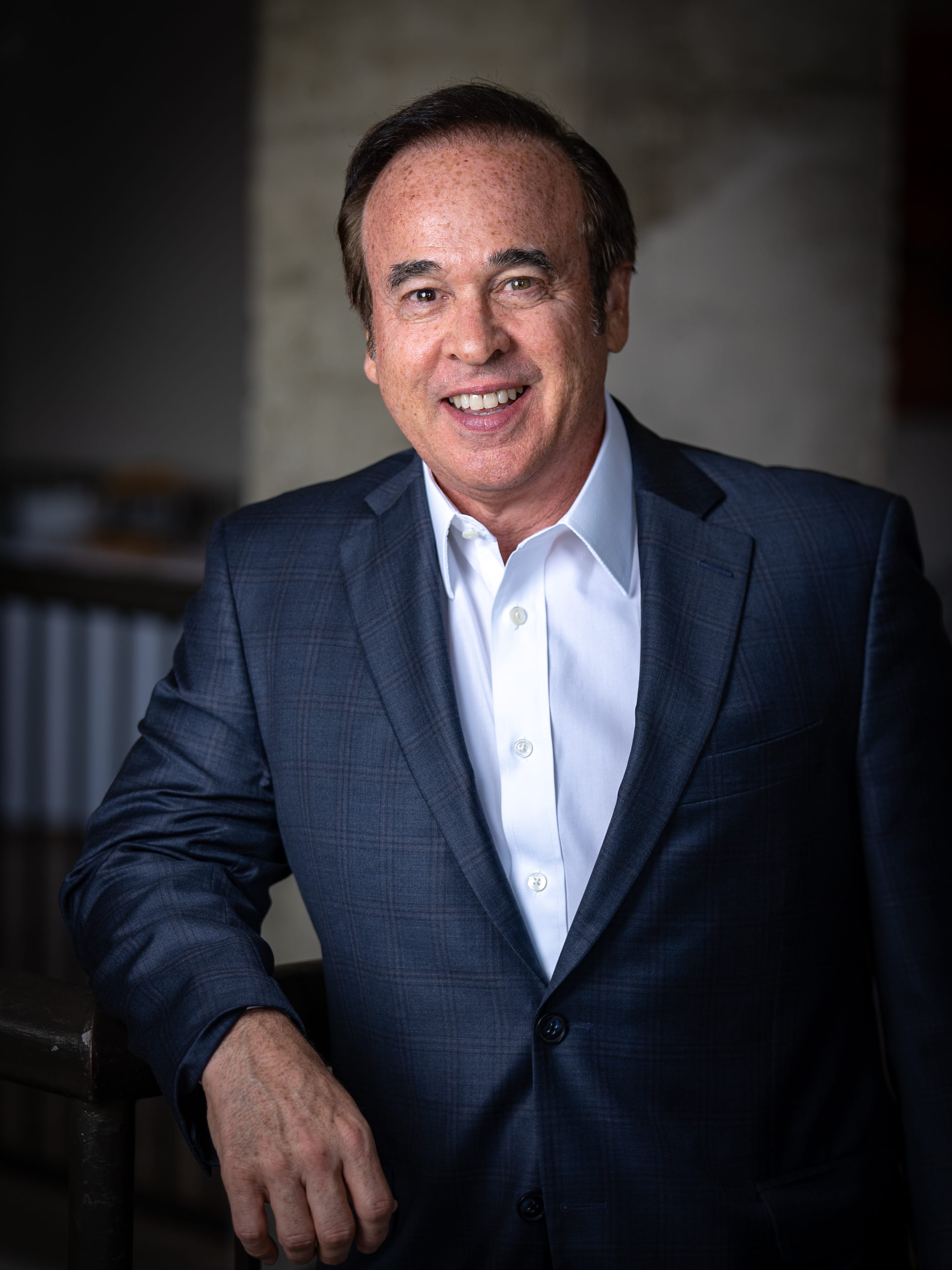
C-Suite: Eric, U.S. News has changed dramatically under your tenure. What has guided your decisions and what lessons might apply beyond media?
I have had the privilege of leading a brand that has been around for over 90 years. Of course, the world has changed a lot over those 90 years and so we have had to evolve ourselves accordingly.
We have gone from a money-losing print magazine to a highly profitable, robust digital marketing platform. To do that, we have had to understand and stay true to our values, starting with a clear North Star: helping our consumers make the most important decisions in their lives. It doesn’t really matter whether we are doing that in print or any other distribution format.
Equally important has been integrity about what we produce, write, and distribute. We have maintained a high quality level of the editorial content we produce while ensuring that our editorial team operates free from business interference, which reinforces the high degree of credibility that we enjoy. And that credibility has been essential as we expanded into areas like education, healthcare, business, money, autos, and travel. Today, we focus heavily on important consumer news that affects people’s lives – it is critical that people know that they can trust the information we provide, which reinforces the trust in our brand; that trust has been the foundation for our growth.
We have also transformed into a data and information business and that is not obvious at all for a journalism company. We receive a lot of respect for our rankings of colleges as well as for our rankings on best hospitals. And that is impressive, as, in one sense, there can only be one winner in a category. But we are able to stand behind our rankings because of the rigor, transparency, and integrity of our methodology. Competitors may try to replicate them, but our commitment to accuracy and clarity really does set us apart.
C-Suite: What is your leadership style in that context? Has it evolved as you’ve navigated the structural shifts?
My leadership style has definitely evolved, though probably more from moving back and forth between the public sector and the private sector than from managing a private company alone.
Having led in the private sector first made me a better leader in public service because I understood what really matters there: execution and getting things done right. Public service, on the other hand, requires much more collaboration. You are operating in three dimensions and constantly factoring in public opinion. When I returned to the private sector, I brought that mindset with me and became a more collaborative CEO.
Another big lesson from public service is scale. The projects are so large that you have to learn to focus on what truly matters and avoid micromanaging. That is especially true when you are transforming a media company in the middle of significant turmoil. You need the right people in the right seats, moving in the same direction, and you simply cannot manage everything yourself. There is too much going on.
I have learned to trust and empower my team. If there is a crisis or a conflict between two areas of the company, I get involved. Otherwise, you need to set a direction and ensure you have the right people to execute well and use good judgment, because no single person can do it all.
C-Suite: AI is transforming the entire media landscape. What parts of media will AI fundamentally reshape and which parts will remain human for longer than people expect?
We are probably still in the very first inning of AI’s impact. AI is already having a dramatic effect on businesses, both because of what it is actually doing and because of how leaders perceive what it will do.
Google has historically been the main funnel driving traffic to digital media companies. But as it increasingly relies on AI-generated overviews that aggregate content, fewer users are clicking through to individual sites. That fundamentally undermines the economics of a media business: fewer eyeballs, fewer consumers, and less value for advertisers or performance marketing. If you look at large media companies that depend heavily on Google, many have seen traffic declines of 25% to 50% over the past year. That’s dramatic.
On the flip side, there is the real, constructive impact of AI. We, and many others, are using AI to improve products so that when users do come to the site, they get a much more valuable experience.
The big question, of course, is whether AI replaces journalists and the content media companies produce. The answer is not yet, but it is coming faster than most people are prepared to accept. We are already seeing AI used in parts of the process: helping journalists with research, background, and editing. Still, we have our journalists reviewing any part of our AI usage.
Then there is what I would call the perceived effect. That occurs when leaders start changing their businesses based on what they think AI will be able to do, even though the technology is not actually there yet. You end up making big decisions without fully understanding what the real impact will be.
There’s also great irony here. Many of the AI systems were trained on the journalism and content created by media companies. Yet some of those same media companies may not exist in the future, while these AI companies will still need that content to keep learning and improving. I think the AI companies are starting to recognize that, which is why you’re now seeing so many content deals happening. In many cases, it’s been a matter of “better to beg for forgiveness than ask for permission,” because without that content, these systems never would have reached their current level of intelligence.
But, I assume every part of our business will be affected either positively or negatively. What I have emphasized internally is that, through this transformation, when consumers see our brand, they need to trust what we are doing. Whether it is AI-enabled products or intelligent bots on our site, people should know that when they see the U.S. News logo, they can rely on what we put in front of them.
C-Suite: What are the most difficult transformation decisions?
The hardest decisions always involve people. Everything else is just working through a problem. With people, there are emotional attachments and long-standing relationships. If, as a CEO, you no longer feel emotion when you are letting people go, then you have probably stayed too long.
Even in a world of increasing technology, you have to respect the individuals in your organization. The real challenge is deciding who to empower to lead the transformation, who can be reskilled or redirected into growth areas, and who ultimately has to be let go. We recently let someone go who had been with the company for decades. Those are incredibly difficult decisions.
We try to handle those moments with dignity, because what matters most to me is respecting the people who have given their time and energy to the company. And, if you have a talented person on your team and they leave for another opportunity, that is a failure as a CEO.
C-Suite: You’ve mentioned that rankings are a major differentiator for U.S. News. In the age of AI, how do you protect that asset?
You can see differentiations today in how journalism, in a broad sense, is perceived today. A media company like ours or The Wall Street Journal, for example, has built its brand on integrity and high reporting standards. At the same time, many young people get their news from TikTok, meaning content with no context, questionable accuracy, and little or no sourcing. People may turn to either social media or traditional media, but the hope is they understand there is a greater level of trust, context, and reliability with a brand like ours or the Journal.
The same applies to rankings. You can ask an AI tool for a “top” list and get an answer, but you do not know the context or the methodology. Can you trust it? Has it been reviewed? Is it right for you?
We are still at a point where people want a credible brand standing behind the rankings and a thoughtful evaluation process they can understand. And rankings are not simply a list. Consumers can slice and dice them based on important criteria like, for our education rankings, debt levels, best schools for veterans, or HBCUs. There is also an element of accountability for the institutions themselves. The institutions must understand the process and see it as credible.
We may be living in a new technology-driven world, but when people see our brand, they know the serious work that is behind anything that we publish. They know there is a methodology they can read and evaluate for themselves. When you are making consequential decisions, about hospitals, higher education, or more, the source really does matter.
C-Suite: This has been a turbulent year for higher education, including increased politicization. How are you dealing with that at U.S. News?
We have stayed focused on what we do best: outcome-driven rankings. We ask fundamental questions. Is the university graduating its students? Are students graduating with manageable debt? Those are the two most important questions facing higher education today.
There are thousands of universities, and for decades they promised that a degree would lead to a better, more prosperous life. For many people, that has not happened over the last 15 years. That is why trust in universities has dropped from around 70% to the mid 30% range. It also explains why enrollment has declined. Today, we have roughly 40 million Americans with some college education, no degree, and student debt. Many feel the system has failed them.
The real workhorses of higher education are public universities and community colleges. What gets most of the attention, though, are the elite institutions, which I believe have shifted in some cases from being purely educational to partly ideological. They have moved away, in part, from teaching students how to think toward telling students what to think.
I have had public disagreements with some of the institutions at the top of our rankings. I have consistently said two things. First, when colleges charge this high level of tuition, they owe students full transparency so families can make informed decisions. Second, colleges must be accountable. Many institutions, especially elite ones, have operated behind ivory towers and grown disconnected from broader society. There has been a lot of good in that, but there has also been a loss of accountability.
Parents and governments are now saying they do not want to continue to provide funding without clear expectations being met. Whether those expectations are right or wrong, we live in a world where transparency and accountability matter, and that applies to everyone.
C-Suite: We’ve covered a lot of ground. What lessons would you want to share with C-suite leaders in other industries?
I am always looking for lessons from other leaders myself. When I think about what has driven the success of U.S. News, a big part of it is that we have been able to build businesses across multiple categories: news, health, education, money and insurance, small business, travel, autos, and product reviews. That diversity has allowed us to grow and become very profitable.
The first piece of advice is to prioritize areas that offer the greatest potential return and are fully aligned with your brand. In a time of transformation, you have to ask: where do you get the biggest bang for the buck? You simply cannot do everything.
The second lesson is to put execution ahead of strategy. Strategy gives you direction, but real learning happens through execution. You have to be willing to launch, test, make mistakes, and learn from the market.
Third, CEOs need to stop thinking they have all the answers. We have moved from a top-down world to one driven by bottom-up learning. Organizations perform best when ideas come from everywhere, especially from people on the front lines or those new to the company. If you can create mechanisms to surface and act on those ideas, the company performs infinitely better.
Finally, as a CEO, give the credit away to others. Even better, do it publicly. It motivates your employees and the company. You benefit anyway if others perform well.